What Is a Decoiler and How to Choose One? Capacity, Mandrel and Sizes
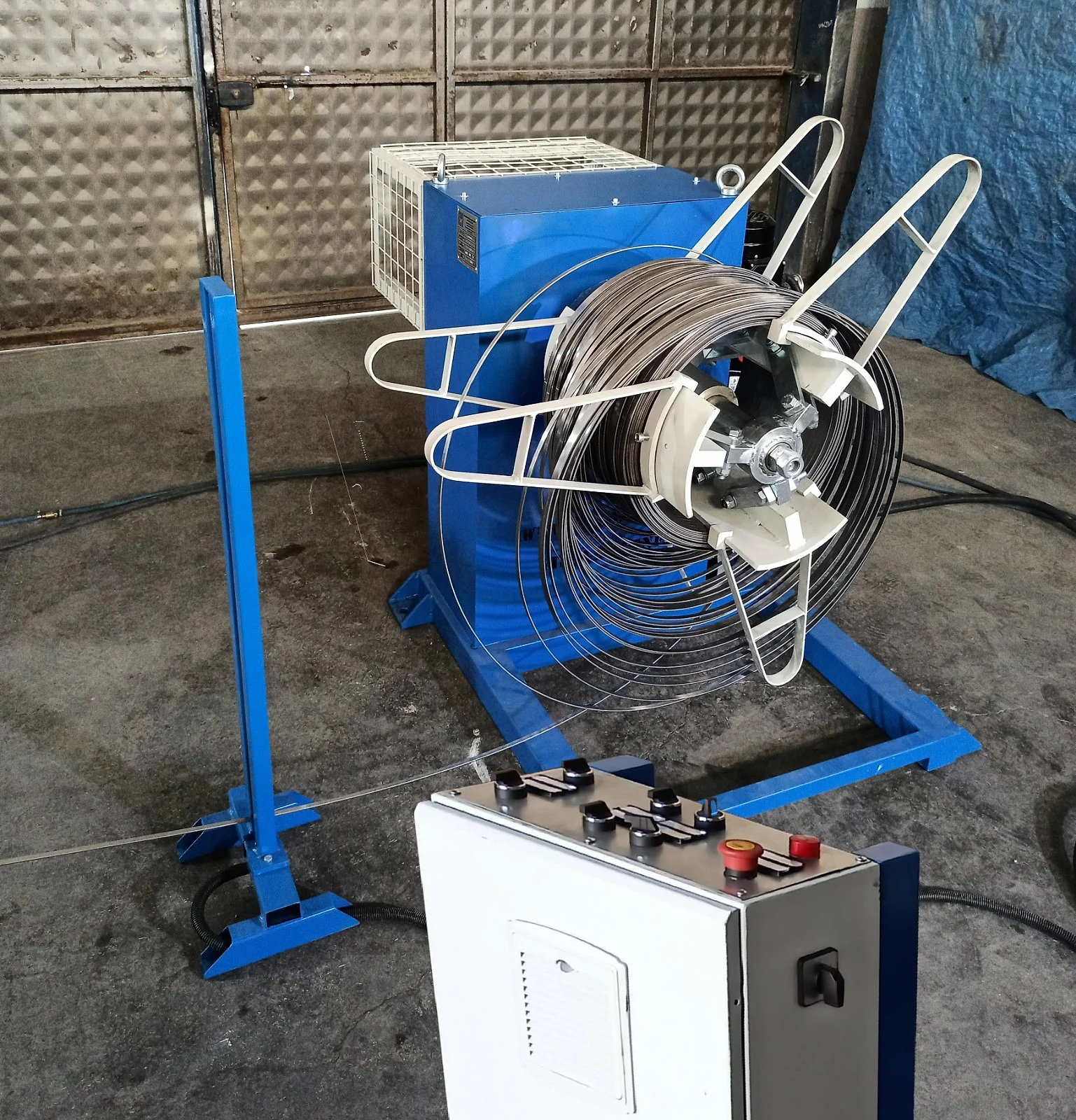
A decoiler (uncoiler, coil uncoiler machine) unwinds coiled sheet metal and feeds it into the production line. The right model is chosen by the coil's weight, width, inner and outer diameter. In Denizli, YILSA builds mechanical and hydraulic uncoilers from 300 kg up to 30 tonnes, for coil widths of 200–1800 mm.
What Is a Decoiler?
A decoiler is the feeding unit that carries the sheet metal coil and unwinds it in a controlled way. It is the first machine of roll forming, press and cut-to-length lines and is usually followed by a straightener feeder. Without a decoiler, the strip cannot be fed into the line smoothly and at a constant speed.
How Does an Uncoiler Work?
- The coil is loaded: the coil is placed on the mandrel (drum shaft); on heavy coils this is done by a hydraulic coil loading car.
- The mandrel expands: the internally clamping mandrel expands and grips the coil by its inner diameter.
- The hold-down arms secure the coil: the upper and lower hold-down arms stop the coil from loosening and springing open once the strapping is cut.
- The strip unwinds: a geared AC motor turns the drum; on YILSA models the unwinding speed reaches up to 40 m/min.
- The speed follows the line: the laser-sensor loop control watches the sheet sag between the uncoiler and the next machine and adjusts the unwinding speed automatically. The braked drum keeps the coil unwinding evenly and safely.
Hydraulic or Mechanical?
The difference between the two types is how the mandrel grips the coil and how the arms open and close:
- Mechanical uncoiler: the mandrel expands through a mechanical mechanism. The design is simple and sufficient for light coils.
- Hydraulic uncoiler: the mandrel and arms are driven by hydraulic cylinders. Heavy coils are clamped quickly and safely with less effort.
YILSA models use a mechanical mandrel up to 1,500 kg; between 2 and 10 tonnes you can choose a mechanical or hydraulic mandrel; from 12 tonnes upwards the mandrel and arms are hydraulic and a hydraulic coil loading car is standard.
How to Calculate Coil Weight
The value that decides the uncoiler choice is the heaviest coil you will run on the line. If the weight is not on the coil label, it is calculated with this formula:
Coil weight (kg) = π / 4 × (Outer dia.² − Inner dia.²) × Width × 7.85
(dimensions in dm; 7.85 kg/dm³ is the density of steel)
Example: a steel coil with an outer diameter of 1300 mm, an inner diameter of 508 mm and a width of 500 mm weighs about 4,400 kg. Its weight, width and diameters all stay within the limits of the 4,500 kg uncoiler class.
You do not have to do the maths by hand: the sheet metal weight calculator finds the weight of your coil and shows the smallest YILSA uncoiler model that fits it.
YILSA Uncoiler Models
| Capacity | Max. width (mm) | Max. outer dia. (mm) | Inner dia. (mm) | Mandrel | Loading car |
|---|---|---|---|---|---|
| 300 kg | 200 | 1000 | 300–600 | Mechanical | – |
| 1 – 1.5 t | 250 – 300 | 1300 | 340–550 | Mechanical | – |
| 2 – 3 t | 400 – 500 | 1300 | 340–550 | Mechanical / Hydraulic | – |
| 4.5 – 6 t | 650 – 700 | 1300 – 1400 | 400–550 | Mechanical / Hydraulic | Optional |
| 7 – 10 t | up to 1200 | 1400 | 470–530 | Mechanical / Hydraulic | Optional |
| 12 – 15 t | 1250 – 1600 | 1500 – 1600 | 470–560 | Hydraulic | Standard |
| 20 – 30 t | 1600 – 1800 | 1800 – 1900 | 508–610 | Hydraulic | Standard |
A model must meet all four of weight, width, inner diameter and outer diameter. If the weight fits but the width or outer diameter exceeds the limit, the next model up is needed.
What We Need for a Quote
- Weight of the heaviest coil (or sheet thickness, width and outer diameter)
- Coil width, inner diameter and outer diameter
- Line speed (m/min)
- The machine the uncoiler will feed (roll former, press, cut-to-length, etc.)
With this information you can request a quote from the uncoiler page or reach our engineering team via our contact page.