What Is a Cable Ladder and When Is It Used?
What Is a Cable Ladder?
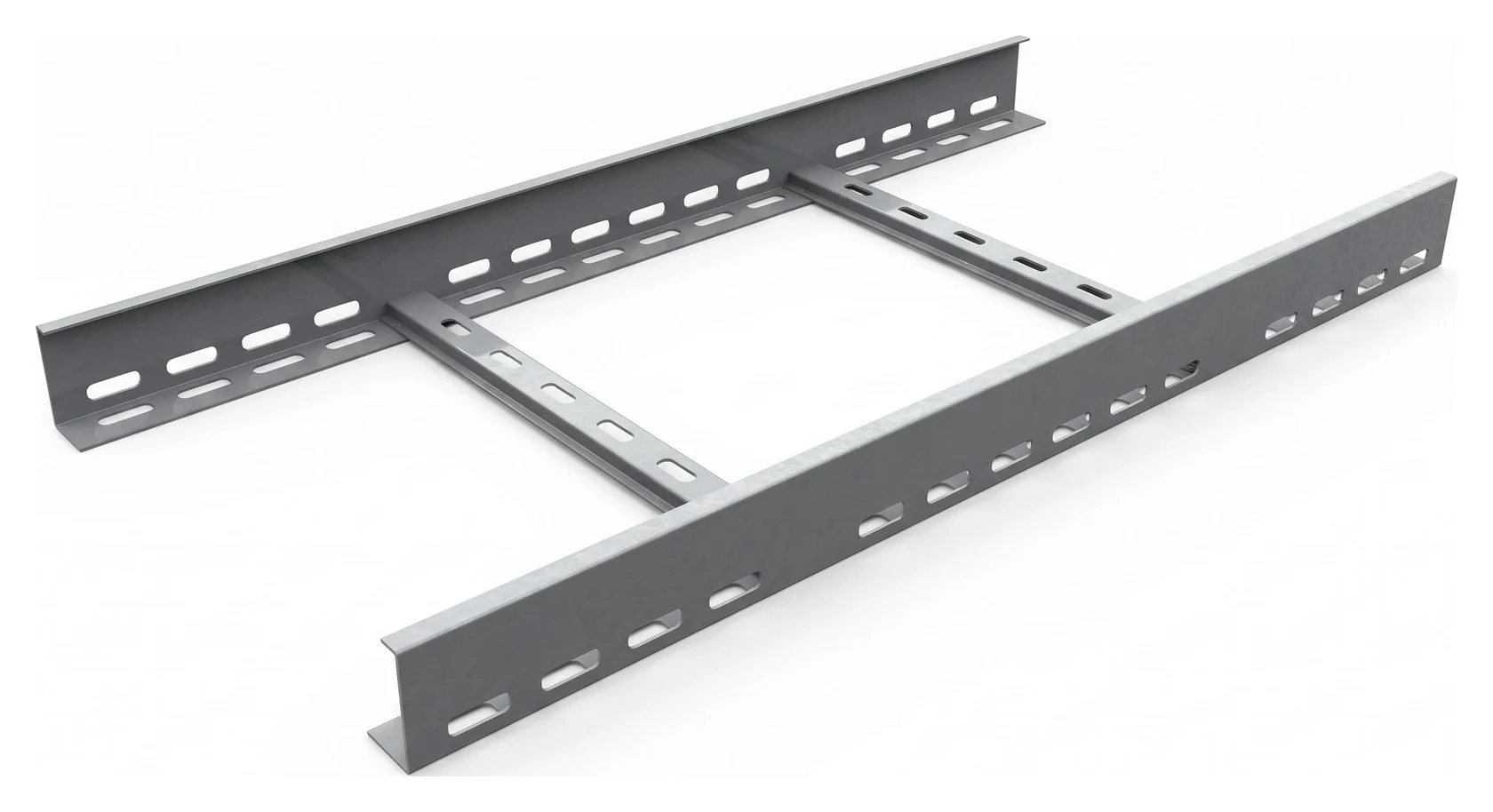
A cable ladder is an open cable support system in which two side rails are joined by rungs at regular intervals. It gets its name because it looks like a ladder laid on its side; in the industry it is also called a ladder-type cable tray or ladder tray. Cables are laid on the rungs and fixed to them with clamps or cable ties.
The Difference Between a Cable Ladder and a Perforated Cable Tray
A perforated cable tray is formed from a single piece of sheet; its base is closed, and the holes in it provide ventilation and cable fixing points. It is suited to carrying many thinner cables in an orderly way.
A cable ladder has no base; the cables rest only on the rungs. Thanks to this open design:
- Air circulates freely around the cables, reducing heat build-up.
- Thick, heavy cables can be tied directly to the rungs.
- Adding or removing cables and inspecting the run is easier.
- Less dust and water collects on it.
When Is a Cable Ladder Used?
A cable ladder is usually the preferred choice for:
- Thick power cables: heavy cable bundles feeding transformers, switchboards and large motors.
- Long runs: factory halls, cable galleries inside plants and connections between buildings.
- Vertical risers: cable runs that pass between floors or rise up tall structures.
- Heavy-industry plants: power plants, cement, iron and steel, chemicals and other facilities with dense cabling.
On routes that carry thinner control and data cables that need protection, a perforated cable tray is more suitable. The two systems are often used together in the same plant.
YILSA Cable Ladder Sizes
YILSA makes heavy-duty cable ladders from galvanised sheet, with C-profile side rails, using presses and dies:
- Width: 50–600 mm (up to 1000 mm as a special order)
- Side height: 40–100 mm
- Sheet thickness: 0.7–2.0 mm
- Standard length: 2400 mm
Mounting: Brackets and Hanger Systems
A cable ladder is fixed to walls with wall brackets and to ceilings with hanger bridges, threaded-rod hangers and U-profile hanger systems. The brackets and hangers made by YILSA fit cable ladders and cable trays 50–600 mm wide. You can see all products on our cable trays page.
Information Needed for a Cable Ladder Quote
The price of a cable ladder depends on width, side height, sheet thickness, the length required and accessories such as brackets and hangers. With this information you can request a quote through our contact page.