16–18 Station Roll Forming in Cable Tray Production
From Coil Sheet to Cable Tray: The Line Flow
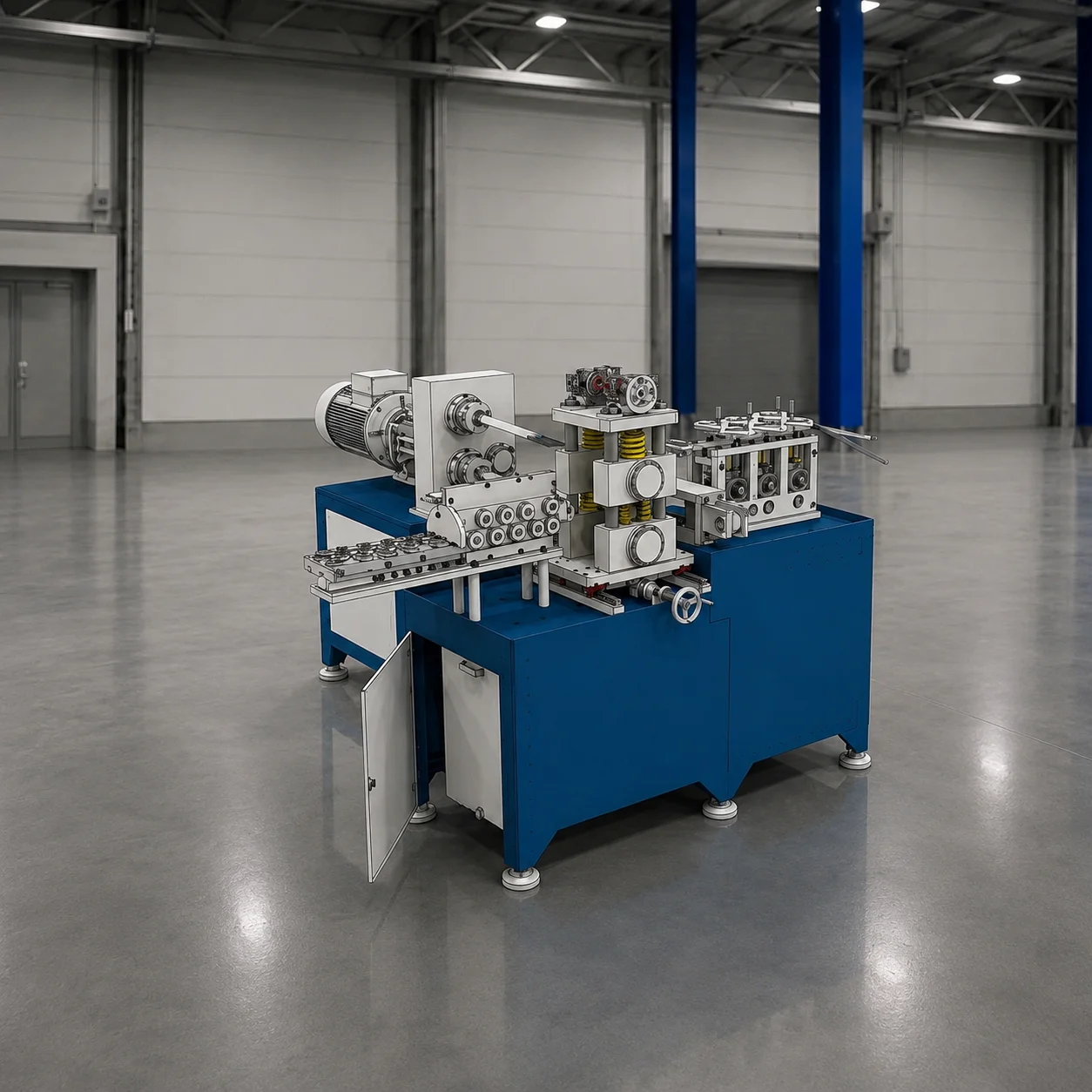
On the YILSA cable tray line, coil sheet passes through these machines in turn: uncoiler → Rotary Punch punching → straightening and feeding → guillotine shear → roll forming. The line produces at 24 metres per minute, and the whole line is run by a single trained operator.
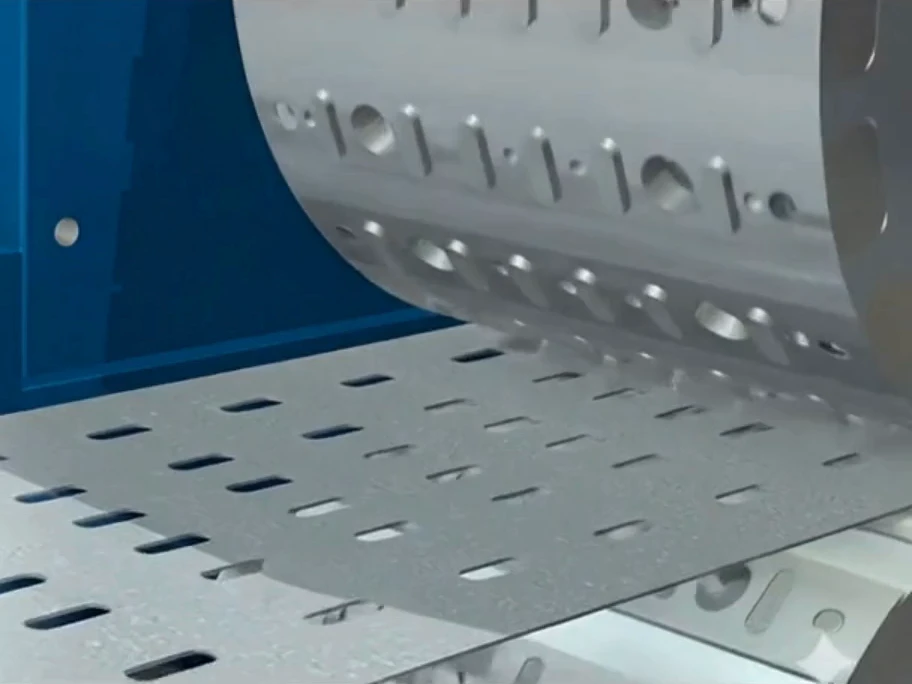
Continuous Punching with Rotary Punch
Sheet 0.7–2.0 mm thick is punched as it passes through the Rotary Punch machine without stopping. The standard hole is a 7 × 18 mm oval, punched at 50 mm horizontal and 25 mm vertical spacing. After the straightener feeder, the punched sheet is cut to length by a guillotine shear. The cut length is set in multiples of 50 mm: the standard length is 2400 mm, and 2500 and 3000 mm can also be produced.
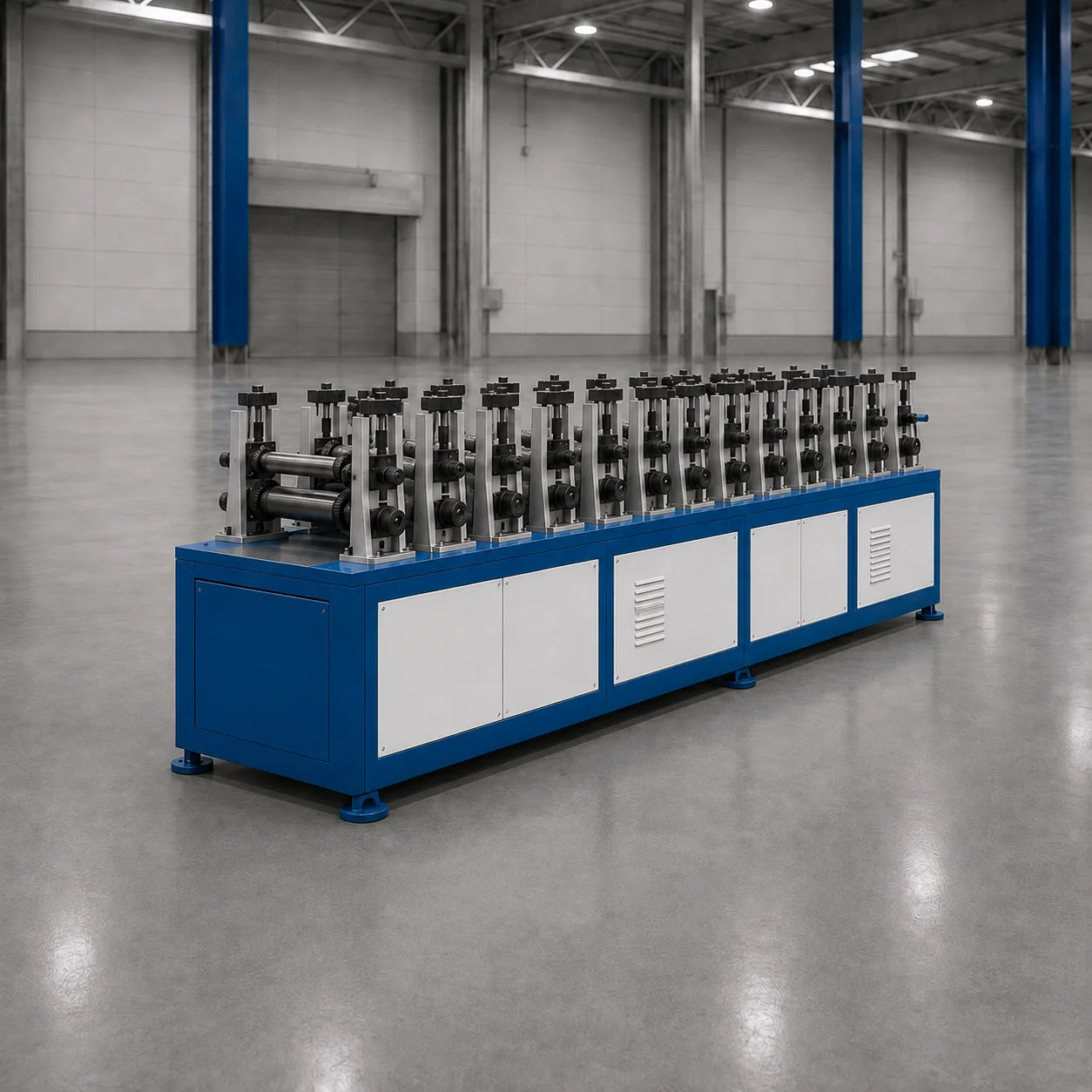
Progressive Forming in 16–18 Stations
The cut-to-length perforated sheet is formed step by step on a 16–18 station roll forming machine. Because each station makes only a small change in shape, the sheet is not strained and the tray comes out true. The forming rolls are made of surface-hardened C 4140 steel and the shafts of C 1050 steel. Depending on the model, the roll former has 11–22 kW of drive power and reaches forming speeds of 24–36 metres per minute.
Fast Size Changes with Motorised NC
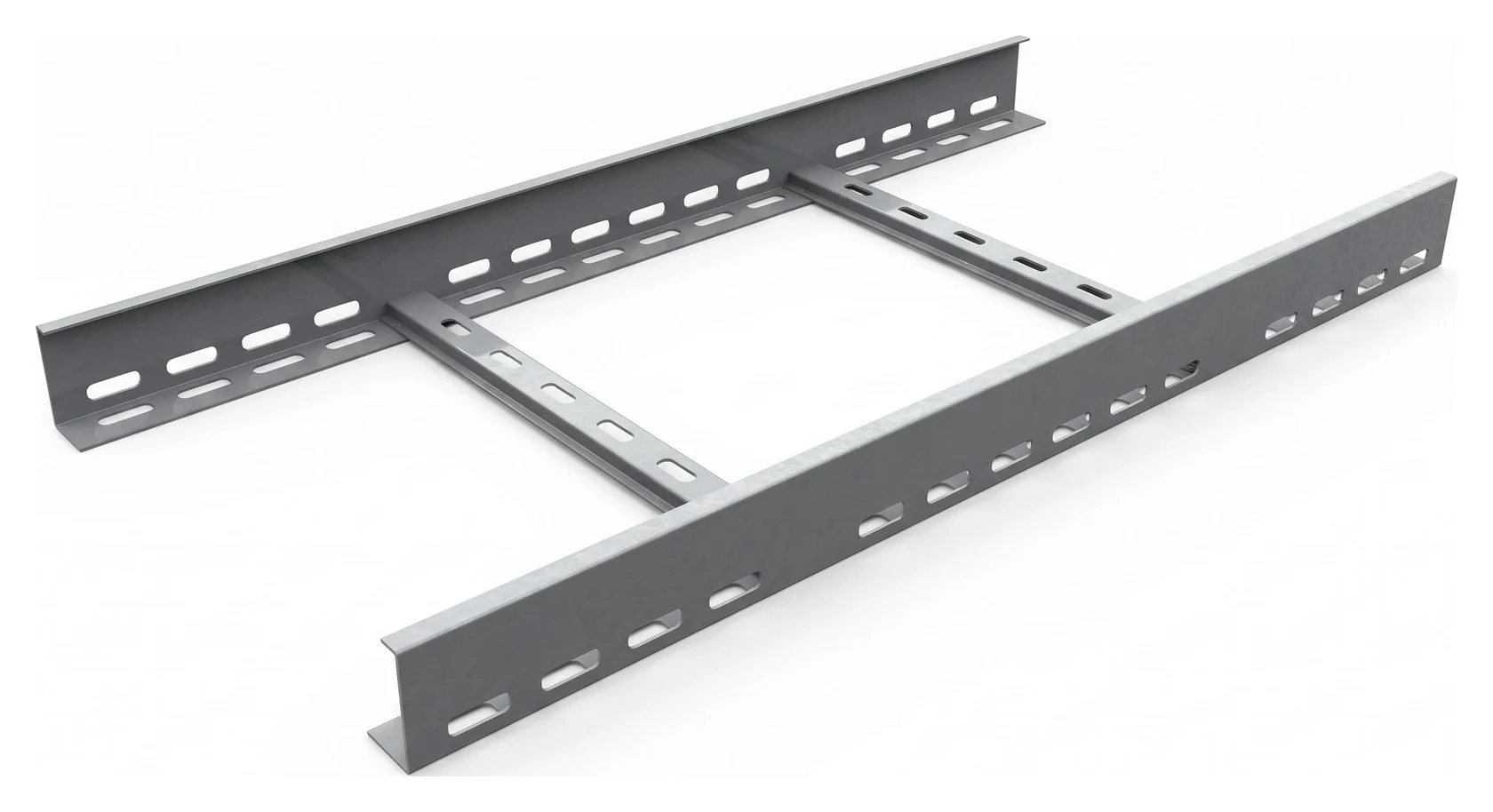
The line produces trays 50–600 mm wide (up to 1000 mm on special projects) with 40–100 mm side height. No rollers are removed for a size change: the gearbox groups slide sideways under the motorised NC system and set themselves to the new size.
Low Energy Consumption
Thanks to Rotary Punch punching, the line uses only 0.16–0.25 kWh of energy per metre, compared with 0.8–1.2 kWh on press lines.