How to Achieve Zero Scrap and ±0.5 g Accuracy in Wheel Weight Production
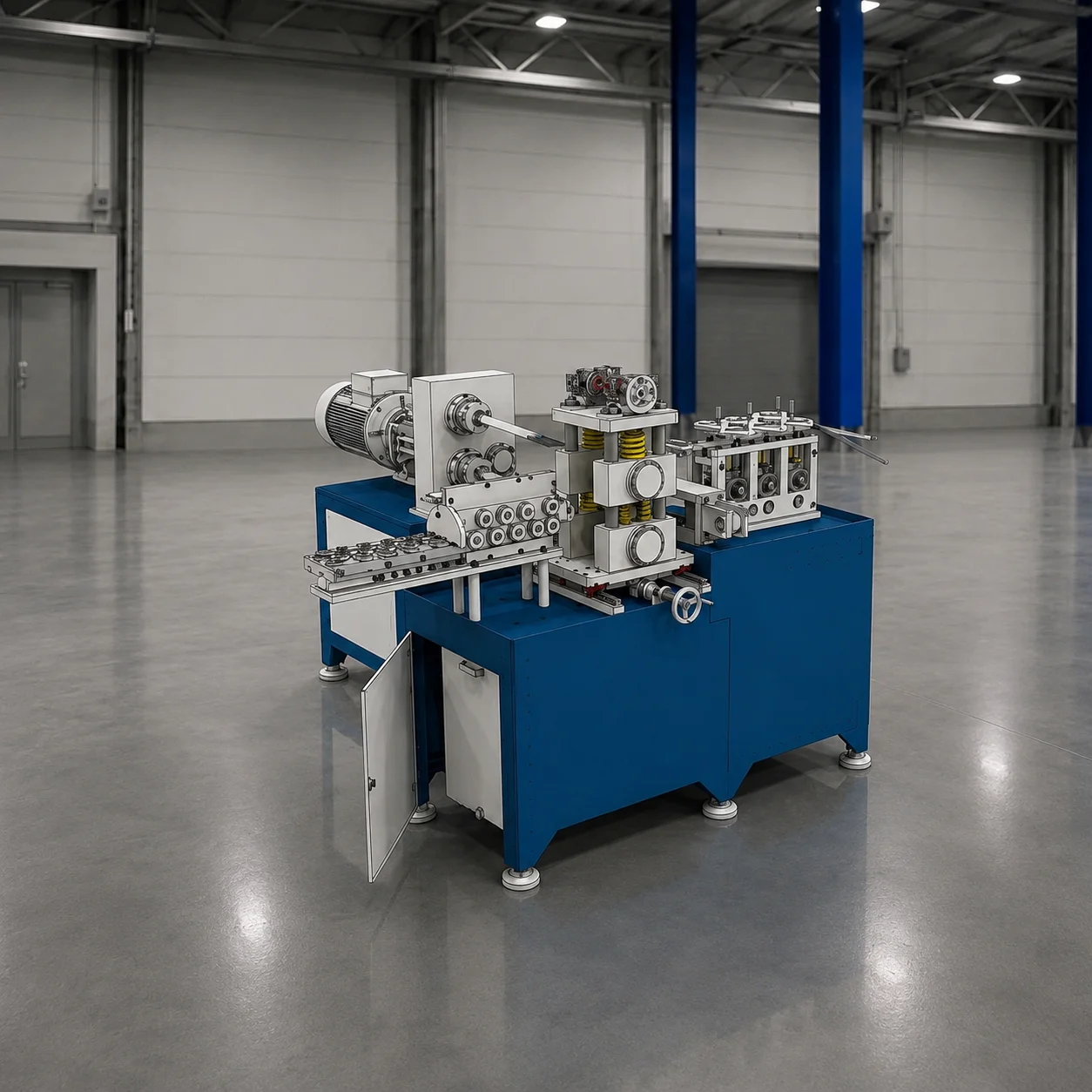
From Wire Rod to Flat Strip: Wire Flattening
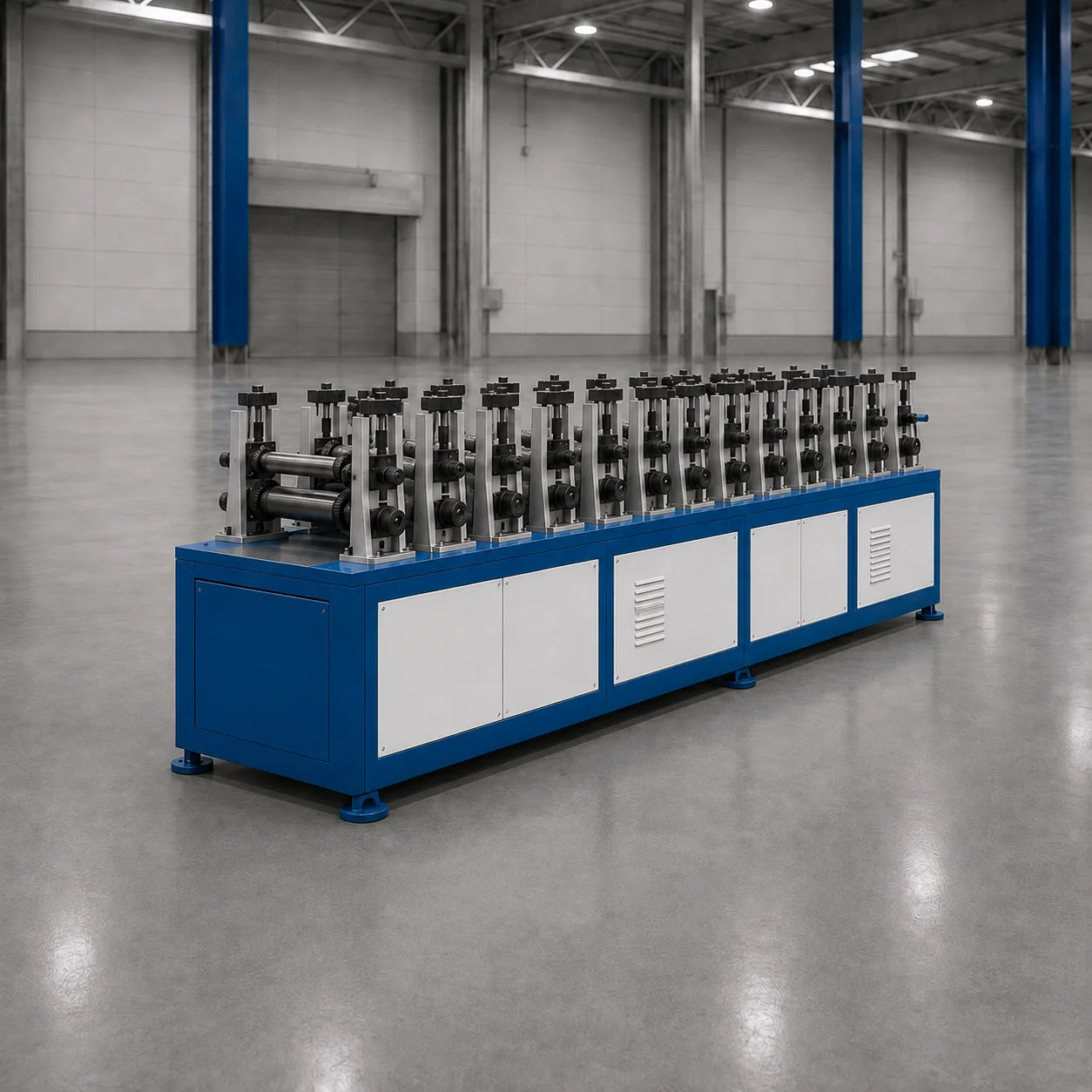
In wheel weight production, raw material is the biggest input. Instead of buying ready-made flat strip, the YILSA line uses Ø8 mm low-carbon wire rod (SAE 1006 / 1008), which is easy to find on the market. The wire flattening machine cold-forms the wire into flat strip with an 11.5 × 3 mm section. This method gives savings of up to 40% in raw material costs.
The 11 kW machine runs at 16 metres per minute. Forming heat is removed by a circulating system with 5% boron oil. Because the roll can be shifted horizontally to change the flattening point, wear is not concentrated in one area and tool life is extended.
Zero Scrap: Cutting with Rotary Punch
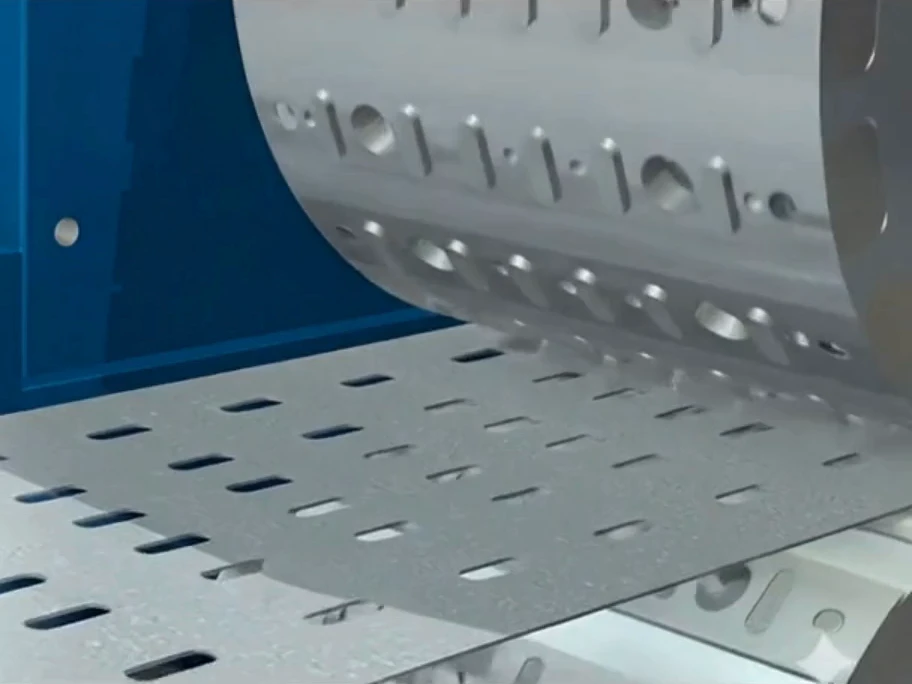
The flat strip passes without stopping through the twin-drum Rotary Punch cutting machine. The drums cut the strip like shears into weight segments and at the same time stamp the weight and logo on them. Cutting produces no chips or waste, so all the raw material becomes product: zero scrap.
The 3 kW machine cuts 60,000 pieces (about 300 kg) of weights per hour and uses only 1.37 kWh of energy per 100,000 pieces.
±0.5 g Accuracy
Weight accuracy depends on two things: a constant strip section and a cut length that never changes. On the wire flattening machine the roll gap is set precisely, and the blade spacing on the Rotary Punch drums is fixed. As a result, deviation on a 60 g strip stays within ±0.5 g.
Taping and Packaging
The cut weights are placed, untouched by hand, on double-sided acrylic tape with a blue protective film. Standard layouts are 60 g strips of 12 × 5 g or 4 × 5 g + 4 × 10 g. If required, the film is kept wider than the tape to make strips with tabs that are easy to peel off with gloves. The taping machine handles 90 kg of product per hour, and the packaging unit prepares 15 boxes per hour with 100 strips (6 kg) per box.